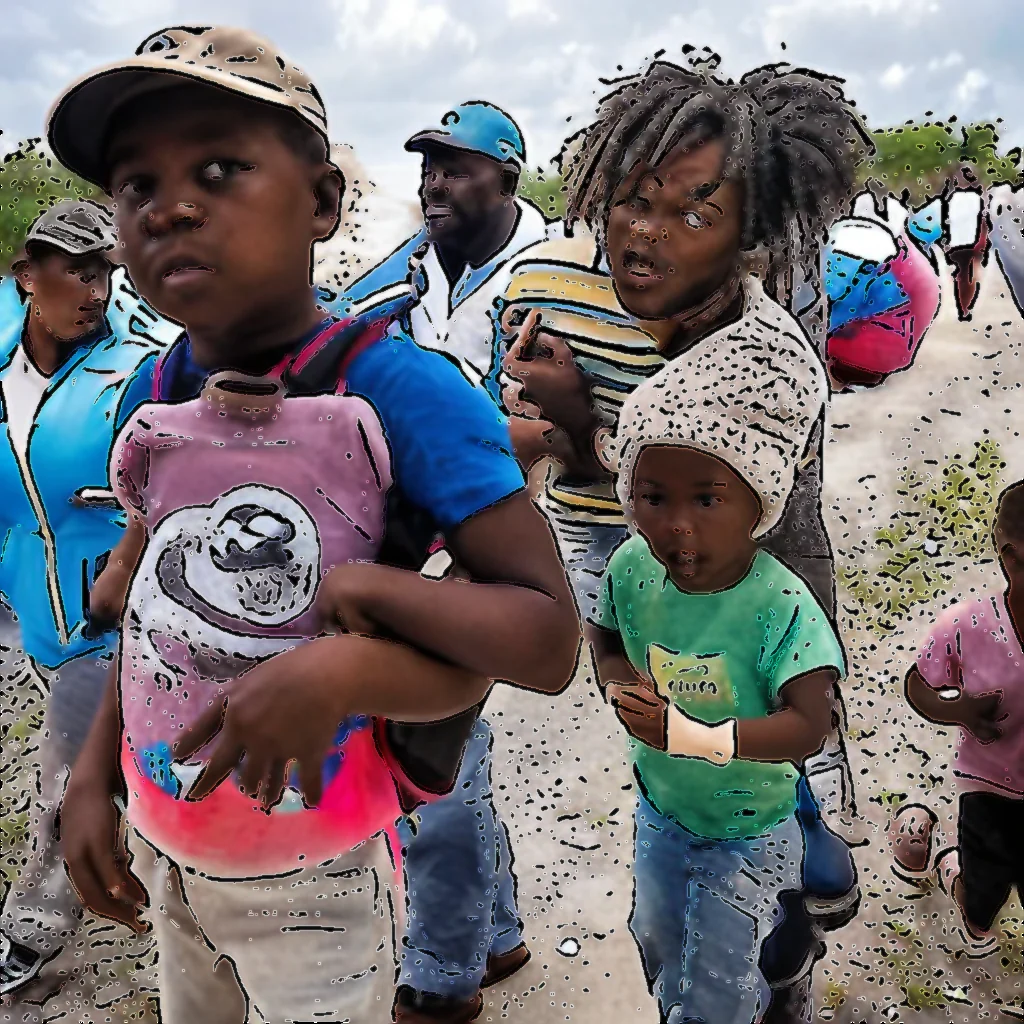
This image captures a scene of displacement, highlighting the growing humanitarian crisis in Haiti. The image serves as a stark reminder of the dire circumstances facing Haitians and the urgent need for international support and aid. **The summary you provided is a description of a photograph.** It doesn’t offer any information about a specific event, historical period, or broader context. To generate a detailed and comprehensive text, please provide the information that is missing from the summary.
Because I believe that it’s our duty to stand up for the truth and to fight against the spread of misinformation. This is not just a matter of personal opinion; it’s a matter of principle. It’s about upholding the values of truth, fairness, and justice. It’s about protecting the integrity of our democracy.
Naples was a place of contrasts, a melting pot of cultures and a haven for the wealthy. The contrast between the affluent and the less fortunate was stark. I witnessed firsthand the lavish lifestyles of the wealthy, with their sprawling mansions, private jets, and yachts.
27, 2022, in a migrant shelter in El Paso, Texas. The migrant shelter in El Paso, Texas, is a temporary housing facility for asylum-seeking migrants who have arrived in the U.S. from Haiti. The shelter is run by the non-profit organization, Catholic Charities of El Paso. The shelter is currently experiencing a surge in the number of Haitian migrants arriving in the border city.
But it’s also a city teeming with life, a vibrant tapestry of cultures, and a place where you can truly feel the pulse of Italy. The city is a melting pot of cultures, with influences from the ancient Greeks, Romans, and Arabs. This is reflected in its architecture, cuisine, and even its language.
president had just left office, and the city was still reeling from the 2005 earthquake. The city was a patchwork of neighborhoods, each with its own distinct character and history. Some were vibrant and bustling, while others were quiet and sleepy. The Golden Gate Bridge, a symbol of San Francisco, was a constant presence, its iconic red color a beacon of hope and resilience.
So it should come as no surprise that as I made my way through the streets of Golden Gate, knocking on doors and trying to convince people to let me into their homes to talk about Jesus Christ, I encountered more than my fair share of Cubans, Dominicans, Peruvians, Salvadorans — and yes, Haitians. And as much as I loved all the families I met as a missionary, no matter where they came from, the Haitian people were some of my favorites. You could not find a more joyful, welcoming and generous group of people. They were always the first to invite you in to chat for as long as they were able — usually while also insisting that you eat whatever delicious food they prepared, even if they didn’t have much for themselves in the first place.
And while the tiny bit of poorly spoken Haitian Creole that I absorbed in order to get by in southwest Florida has long since abandoned me, I will never forget the kind smiles of the people I passed on the street as they responded to my customary greeting of “Sak pase?” (translation: “What’s happening?”) with a hearty “N’ap boule!” (“We’re good!”) Of course, the immigrant experience in America isn’t all laughter and sunshine, even in the Sunshine State. I quickly found that when people let you into their homes to talk about God, they often end up talking about their problems — and there were plenty of problems to discuss.
Most of these families fled poverty and violence in their hurricane-ravaged island home to seek refuge in the United States, with virtually all doing so legally. Upon arriving on these shores with little to nothing in their pockets, they began their pursuit of the American dream like so many immigrants before them: from the bottom rung of the economic ladder. Many were living in multigenerational family units where multiple family members were working two or three jobs just to make ends meet — and often still finding themselves falling short. One such Haitian family made a life-changing impression on my heart and mind.
The air was thick and heavy, making it difficult to breathe. I was nervous, but determined to meet my new neighbors. The door opened, and a woman with a warm smile greeted me. Her name was Mrs. Johnson, and she was incredibly welcoming.
* **The Republican Party Under Attack: A False Narrative**
* **Divide and Conquer:
They are the people who are being targeted by the attacks on the Republican Party. This is a deliberate strategy, a calculated move to divide and conquer. The goal is to paint a picture of the Republican Party as a party of the wealthy, of the privileged, of the elite. This is a false narrative, a dangerous lie that seeks to undermine the legitimacy of the Republican Party and its values.
They’re the backbone of our communities. They work tirelessly, they pay their taxes, they contribute to our society, and yet they are burdened with the weight of these new problems. This is not about political correctness or being sensitive. This is about basic human decency. It’s about recognizing that these families are already struggling and adding more burdens to their lives will only exacerbate their struggles.

news is a contributor at TrollTrim. We are committed to providing well-researched, accurate, and valuable content to our readers.